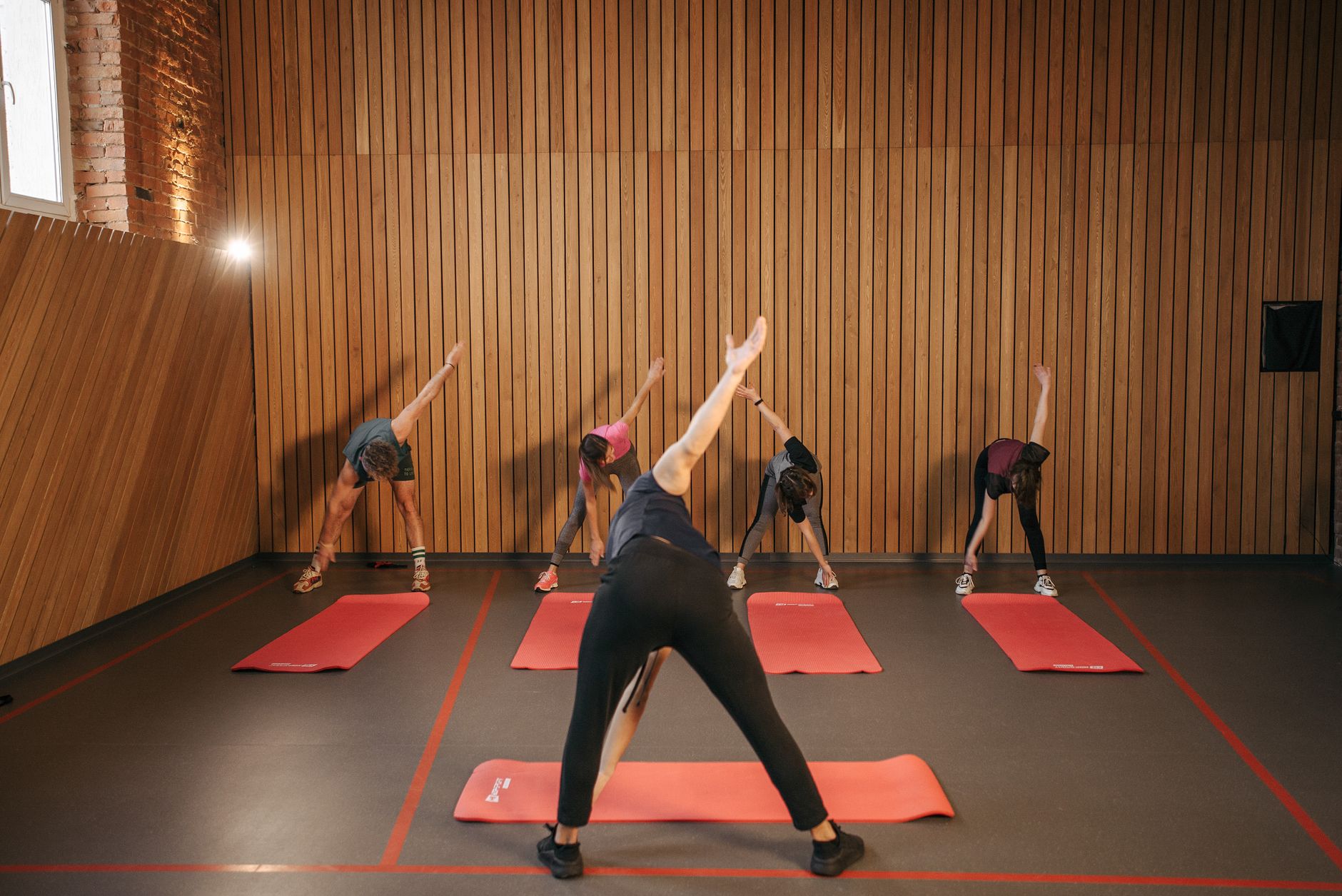
Short notes from the floor and from the programs we write. These are not case studies and they do not name members. They are the explanations we find ourselves repeating in the first month.
Why the first session is ninety minutes
A consult that tries to sell a pack in twenty minutes usually skips the only information that changes the program: the week you can keep, and the constraints a practitioner has already named. Ninety minutes gives the screen time to be a screen. We look at joint range, single-leg control and breathing, then we sit down with a calendar and a training history that goes back a year, not a week. The extra half hour is where people remember the calf strain from last March, or the Thursday they always finish after 19:00. That detail is what stops us writing a block that looks tidy on paper and collapses on the second Tuesday. You leave with spoken notes. A written summary follows within two business days, and the $140 fee credits toward a package bought inside fourteen days. We will not compress the hour to fit a lunch break.
Three ways people stall at week six
Week six sits in the second phase, when loads have risen and the novelty of a new gym has worn off. The stall we see most often is a calendar stall: two travel days, a late sitting, and a session that was never rebooked. The program is still on the sheet; the week was not. A second stall is load that jumped because a good week felt like permission. We would rather repeat a number than invent a personal best on a Thursday. The third is sleep, which members commonly report as “fine” until we ask for a weekday average. None of these are moral failures. They are why two check-ins a month exist, and why a typical 12-week block has a written deload in week four and week eight. If week six is noisy, we reduce density for seven and eight, then retest later. Progress is attendance and a working set you can repeat.
Training around an Ottawa winter commute
Somerset Street West in February is a different commute than Somerset in June. Ice, a delayed O-Train, and a wind along the canal will eat the fifteen minutes you had between the office and a 17:30 class. We plan for that in the block. Morning sessions at 06:30 and 07:00 exist because a lot of our members would rather lift before the sidewalks glaze than fight the evening. Remote programming covers the week you are in a hotel in Toronto or working from a building that is not ours. If you walk from Lyon, give yourself a buffer and keep a pair of floor shoes in a locker so you are not doing a warm-up in wet boots. An illustrative winter week is two floor sessions plus one class, with a written indoor substitute for any outdoor return-to-run slot when the park is ice. The program should bend with the city.
What a post-rehab block actually looks like
Twelve sessions, a letter from a physiotherapist or a physician, and a clipboard that has the constraints written at the top of every week. That is the block. We are not a second clinic. We take the range, tempo and loading the practitioner allowed, and we condition inside it. A typical session is 55 minutes: a longer warm-up than a regular 1-to-1, the allowed patterns at a conservative RPE, and a cool-down on the mats. If the practitioner asked for a note, we send attendance and loads, not a diagnosis. Members commonly enter this block after a period of treatment and before they join a regular small group. At session twelve we retest the screen and decide, with you, whether the next month is still constrained or whether a standard 12-week block is now the right paper. Clearance is required. Without it we train around the sore structure and wait on the letter.
Small-group ratios and why we cap classes at eight
Eight people is the point where a coach can still see a squat depth and a hinge pattern in the same minute. At ten, in a strength class, someone is always just out of the line of sight when a bar comes off the floor. That is why small-group strength is capped at eight, conditioning at ten (the equipment set is two rowers, two bikes and a turf lane), and mat classes at twelve (people need space to lie down). The ratio on the website is 4:1 as a maximum we will not dress up as a boutique promise; it is a floor rule. Booking two hours ahead exists so the cap is real. If a class is full, the app offers the next slot rather than squeezing a ninth person onto a platform. Members who want more eyes than that stay in 1-to-1 or a trio. The class is coached at a density the room can support.
Protein, plainly: what we tell clients before anything else
Before recipes, grocery lists or a conversation about dairy, we ask how many times a day protein actually shows up on the plate. For a lot of desk-based members in Ottawa the honest answer is once, plus whatever was in a late coffee. The first month of nutrition coaching is that question, asked without theatre: a palm of protein at the meals you already eat, and a plan for the lunch you can assemble on a Tuesday. We do not sell supplements. We do not write a clinical meal plan, and if a medical condition needs a registered dietitian we will say so. Twelve weeks at $495, or $185 a month, is enough time to make the habit visible in a log and in how a training week feels. Members commonly report that the useful change was not a new cuisine. It was putting protein on the plate they already had, on the days they already train.